This article reviews top 1500-watt capable solar generators ideal for outdoor trips, emergencies, and off-grid living. It highlights five models that balance high output, battery longevity, and practical portability. Each option powers essential appliances, supports rapid recharging, and integrates LiFePO4 batteries for longer life. Readers will find objective comparisons, key specs, and practical buying tips to help select the right unit for home backup, RVs, camping, or remote work.
The following table summarizes the chosen products to provide a quick reference as you read more details below.
| Product | Brand | Output (AC) | Battery | Approx. Weight |
|---|---|---|---|---|
| Jackery Solar Generator 1000 V2 | Jackery | 1500W | 1070Wh LiFePO4 | 23.8 lbs |
| Anker SOLIX C1000 Gen 2 | Anker | 2000W | 1024Wh LiFePO4 | Lightweight |
| Anker SOLIX C2000 Gen 2 | Anker | 2400W | 2048Wh LiFePO4 | Compact |
| VTOMAN FlashSpeed 1500 | VTOMAN | 1500W | 1548Wh LiFePO4 | Portable |
| OUPES Exodus 1200 | OUPES | 1200W | 992Wh LiFePO4 | Versatile |
Jackery Solar Generator 1000 V2 with 200W Panel

The Jackery Solar Generator 1000 V2 centers on a 1,500W AC output with a 3,000W surge peak, capable of running multiple high-demand appliances such as fridges, small air conditioners, or electric pots. Its 1,070Wh LiFePO4 battery delivers a long cycle life, and the unit weighs about 23.8 pounds with a foldable handle for portability. A notable feature is the one-hour fast charging mode, which speeds up replenishment to 100% under emergency conditions using the Jackery App safeguards. The system emphasizes longevity, offering a lifespan above a decade with robust battery chemistry.
Key considerations include the balance between capacity and weight for mobile use, the quality of the battery’s cycle life, and how fast the system recharges under different conditions. The 1500W output supports critical appliances, making this model well-suited for camping, RV trips, and bug-out scenarios where reliable power is essential. The compact form factor aids transport, but users should assess whether the included solar panel capacity aligns with typical energy needs and available sun exposure.
Anker SOLIX C1000 Gen 2 Portable Power Station

The Anker SOLIX C1000 Gen 2 offers 2,000W continuous output with a 3,000W peak, backed by a 1,024Wh LiFePO4 battery. It charges rapidly, with HyperFlash recharging up to 1,600W, enabling close-to-full replenishment within an hour in optimal conditions. The unit is designed for home backup, remote work, and off-grid living, supporting up to 10 devices across multiple ports. Its compact and portable profile makes it suitable for travel in RVs or outdoor excursions, while the battery chemistry contributes to long life and lower degradation over time.
When selecting this model, potential buyers should evaluate their simultaneous load needs and the practicality of quick recharges. The C1000 Gen 2 is a strong option for those who prioritize rapid recharging and broad device support, especially in scenarios where outages are expected or where time to recharge is limited. It fits well with both urban camping and more remote environments where access to power is intermittent but sun exposure is reasonable.
Anker SOLIX C2000 Gen 2 Portable Power Station
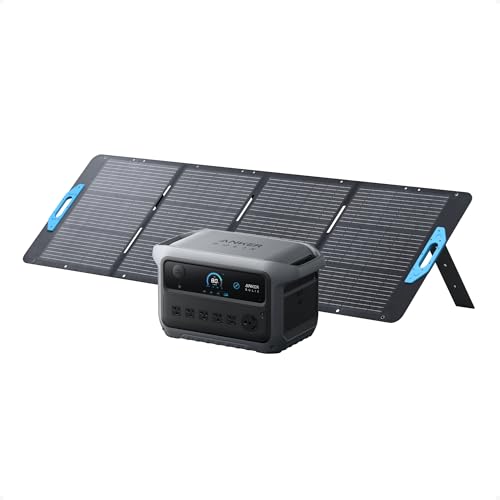
The SOLIX C2000 Gen 2 expands to 2,400W continuous output with a 4,000W surge, paired with a 2,048Wh LiFePO4 battery. It is designed for larger energy requirements such as power tools, small refrigerators, and multiple devices during outages. The system emphasizes efficiency, including low idle consumption to minimize waste when not actively drawing power. A notable feature is its expandable capacity, enabling up to 4kWh with an additional expansion battery, which is attractive for longer off-grid periods or whole-home backup scenarios.
Practical considerations include the initial investment in a higher-capacity unit and the need for an expansion battery if longer runtimes are planned. The C2000 Gen 2 suits campers, tiny homes, and households seeking dependable power with room to scale. Its robust output and expandability make it a compelling choice for users who anticipate extended outages or heavy-duty use across multiple devices.
VTOMAN FlashSpeed 1500 Portable Power Station

The VTOMAN FlashSpeed 1500 provides 1,500W continuous AC output with a 3,000W peak. It features 1,548Wh LiFePO4 capacity and a high-speed recharge capability, especially when paired with solar input and DC input for faster top-ups. The device emphasizes safety with LifeBMS protection, guarding against over-charge, over-discharge, over-voltage, and other fault conditions. The design focuses on outdoors and emergencies, with a battery life profile intended to endure thousands of cycles while keeping the weight and form factor suitable for travel.
For buyers weighing options, the FlashSpeed 1500 stands out for quick recharging and sturdy protection systems, making it suitable for camping, remote work, and home backup. Consider whether you need peak capabilities for surge-heavy devices and whether your typical environments allow sufficient sun exposure to maximize solar charging efficiency.
OUPES Exodus 1200 Portable Power Station

The OUPES Exodus 1200 delivers 1,200W continuous AC output with a 3,600W surge, powered by a 992Wh LiFePO4 battery. It includes multiple AC outlets, USB-C, and other ports, making it versatile for camping, RV use, and emergency backup. The system supports typical off-grid needs with 1,200W capacity and a robust battery chemistry designed for thousands of cycles. The product description emphasizes stability, UPS functionality, and the ability to run essential devices during grid failures.
Key considerations for this model include its total energy budget and how many devices can run simultaneously, as well as the practical solar charging rate with available panels. The Exodus 1200 is well-suited for users who want dependable power for moderate loads, with the flexibility to expand or adapt as energy needs evolve during trips or outages.
Buying Guide: Key Purchase Considerations and Comparisons
- Output vs. capacity balance: If you plan to run high-wattage appliances (AC, fridge, power tools), prioritize models with higher continuous output and sufficient surge capacity (e.g., 3000W surge) to handle start-up loads.
- Battery chemistry and cycles: LiFePO4 batteries deliver longer lifespans and thousands of cycles. This reduces total cost of ownership and maintenance over years of use.
- Recharging speed: Fast charging options (HyperFlash, 1-hour top-ups) are valuable during emergencies. Consider whether the unit supports fast solar input or USB-C/AC recharging.
- Port selection and versatility: Multiple AC outlets, USB-C PD, and car ports enable charging a wide range of devices simultaneously. Expandability can be a plus for whole-home backup goals.
- Portability and weight: Heavier systems offer more capacity, but lighter designs improve transportability for camping or road trips. Evaluate how you plan to transport the unit and whether a handle or rugged build is needed.
- Solar panel compatibility and expansion: Some units pair with optional solar panels and expansion batteries. Consider whether you want a modular setup that can scale with energy needs over time.
- Safety features: Look for protections such as over-charge, over-discharge, short-circuit, and thermal safeguards. A reliable Battery Management System (BMS) helps extend life and protect connected devices.
- Warranty and support: A longer warranty with responsive customer support can be a decisive factor when investing in off-grid power.
Overall, the best 1500-watt solar generator depends on your priorities: rapid recharging capabilities and compact form for travel, or higher continuous output and expandability for home backup. The models reviewed here span a range of use cases from portable camping kits to more robust, semi-permanent off-grid solutions. Evaluate your regular device load, likely outage duration, and sun exposure to choose the most suitable option for your needs.