Finding reliable 200Ah LiFePO4 batteries is essential for RV enthusiasts who demand stable power, long cycle life, and safe operation in varied conditions. This article profiles five top 12V/200Ah options that are well-suited for RVs, camping, and off‑grid setups. Each entry highlights key features, including built‑in BMS, deep-cycle performance, temperature protection, and practical use cases. Readers will get a comparative sense of capacity, protection, weight, and expandability to help make an informed decision.
Summary of chosen products:
| Product | Brand | Capacity | Key Feature | Link |
|---|---|---|---|---|
| Marsenergy 12V 200Ah LiFePO4 | MARSENERGY | 200Ah | Bluetooth monitoring, built-in 200A BMS | Amazon |
| 12V 200Ah LiFePO4 Battery (BMS 200A) | yeagulch | 200Ah | Compact, high energy density; robust BMS | Amazon |
| 12V 200Ah LiFePO4 (BMS 200A) | dumfume | 200Ah | Extended cycles; eco-friendly LiFePO4 | Amazon |
| Litime 12V 200Ah LiFePO4 | Litime | 200Ah | High cycle life; expandable system | Amazon |
| Elfhub 12V 200Ah LiFePO4 | Elfhub | 200Ah | 2560Wh; IP65 waterproof; 200A BMS | Amazon |
Marsenergy 12V 200Ah LiFePO4 Battery With Bluetooth
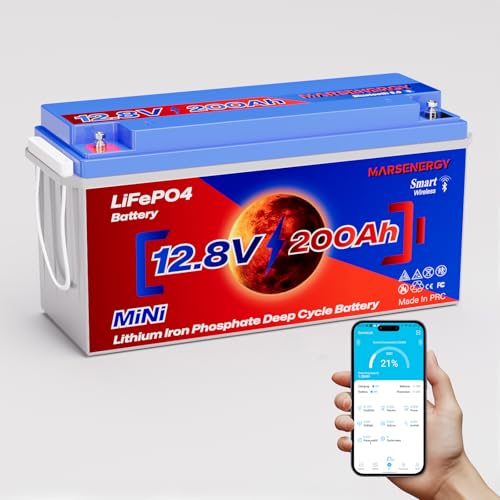
The Marsenergy 12V 200Ah LiFePO4 battery combines a built-in 200A BMS with Bluetooth-based real-time monitoring. Users can track voltage, current, state of charge (SOC), and temperature via a dedicated Android/iOS app by scanning the QR code on the back of the unit. This level of connectivity supports proactive maintenance for RV systems, solar storage, and trolling motors, making it a strong all‑around option for campers who want remote visibility into power status.
12V 200Ah LiFePO4 Battery With Built‑In 200A BMS

This model emphasizes a compact form factor with a modest weight, ideal for RVs where space is at a premium. It features a built-in 200A BMS that guards against overcharging, overdischarging, overcurrent, overheating, and short circuits, plus automatic high/low temperature cut-offs. The battery supports thousands of cycles and is designed for reliable off‑grid use in RVs and solar storage. Prospective buyers should consider the weight and dimensions relative to their mounting space when planning installations.
Dumfume 12V 200Ah LiFePO4 Deep Cycle Battery

The Dumfume 12V 200Ah LiFePO4 battery markets itself on extended cycle life and a robust environmental profile. It uses LiFePO4 chemistry with a built-in 200A BMS to protect against abnormal conditions, and it touts up to 15,000 cycles under favorable DoD, significantly exceeding traditional lead‑acid life. The product stresses safe operation in RV, solar energy storage, and off‑grid camping scenarios, with emphasis on eco-friendliness and long-term reliability.
Litime 12V 200Ah Lithium LiFePO4 Battery
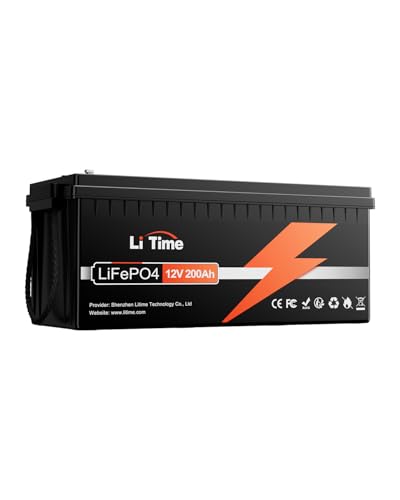
The Lifepo4 option from Litime emphasizes high energy density and a substantial energy capacity (2560Wh). Weighing around 42 pounds, the unit is presented as a practical balance of portability and power, with a stated 4000+ cycles at 100% DoD, and even more at partial DoD. The description highlights its potential to support long RV trips, camping weekends, and backup power without frequent replacements, and notes its expansion potential for larger ~48V systems.
Elfhub 12V 200Ah LiFePO4 Battery
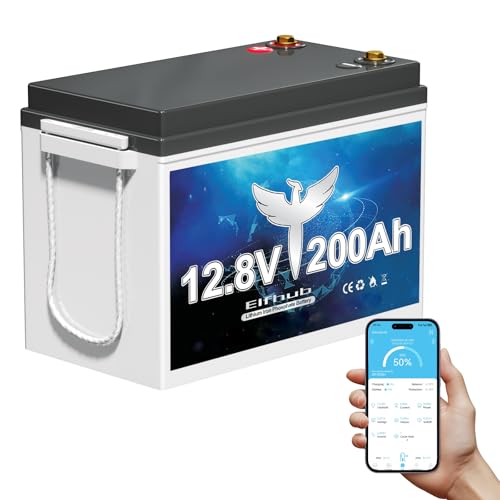
Elfhub’s 12V 200Ah LiFePO4 battery offers a compact design with a strong 2560Wh energy capacity and a built‑in 200A BMS. It highlights IP65 water resistance, which enhances suitability for outdoor RV setups and marine contexts. The battery’s protection features guard against overcharge, over-discharge, overcurrent, and short circuits, while temperature protection helps preserve performance in varying climates. The product is positioned as a reliable workhorse for RVs, trolling motors, and solar storage.
Buying Guide: Key Purchase Considerations
When choosing a 200Ah LiFePO4 battery for an RV, several factors influence suitability and long‑term value:
- Battery Chemistry and Cycle Life: LiFePO4 cells deliver high cycle life and safety. Look for specifications that show thousands of cycles at a practical depth of discharge (DOD).
- Built‑in BMS: A capable Battery Management System protects against overcharge/discharge, overcurrent, overheating, and short circuits. A 200A rating is common for 12V packs in this category.
- Temperature Protection: High/low temperature cutoffs help prevent damage during cold nights or hot days. Check operating temperature ranges and cut-off thresholds.
- Weight and Form Factor: A 200Ah LiFePO4 battery typically weighs between 40–50 pounds. Ensure it fits your RV’s battery compartment and mounting hardware.
- Expandability: Some systems allow parallel or series connections for higher voltage or capacity, useful for larger RV setups or future upgrades.
- Monitoring Capabilities: Bluetooth or app-based monitoring aids maintenance by revealing SOC, voltage, current, and temperature in real time.
- Environmental and Safety Considerations: LiFePO4 is generally safer and more eco-friendly than lead‑acid options, with lower risk of thermal runaway and a longer service life.
- Warranty and Support: A solid warranty and responsive support can reduce total cost of ownership over time.
Comparative considerations for RV users include weight versus space constraints, the need for remote monitoring, and how the battery integrates with existing solar and inverter systems. For campers seeking maximum longevity and off‑grid reliability, a model with a robust BMS, deep cycle performance, and expandability options provides the best long-term value. For those prioritizing compactness and ease of installation, lighter models with a strong protection suite may be preferable.
In summary, the five highlighted options provide a spectrum of features that align with common RV power needs—from Bluetooth monitoring and durable BMS protection to high cycle counts and weather resilience. Prospective buyers should map their expected daily consumption, planned expansion, and installation space to a model that best balances performance, cost, and longevity.