Maintaining accurate tire pressure monitoring is essential for vehicle safety, fuel efficiency, and extended tire life. This guide reviews top aftermarket TPMS sensors that provide reliable performance, broad vehicle coverage, and easy installation. Each option below is designed to fit common GM, Chevrolet, GMC, Cadillac, and other vehicle makes, helping shops and DIYers quickly service TPMS without breaking the bank.
| Product | Brand | Notes |
|---|---|---|
| Autel MX Sensor (2 in 1, 315/433 MHz) | Autel | OE-level programmed by TS508/TS408 tools; press-in rubber valves |
| GM 315MHz TPMS Sensor (4-Pack) | CDWTPS | Pre-programmed for GM vehicles; no programming required |
| Masoll Gen 2 TPMS Sensor (4-Pack) | Masoll | Wider vehicle coverage; DIY programming with included tool |
| Tymate TM7 TPMS | Tymate | Wireless external sensors; color LCD; six alarm modes |
| Tymate TM2 RV TPMS | Tymate | Solar charging; 4 sensors; RV/trailer ready |
Below, five carefully chosen products are explored in detail. Each section highlights compatibility, installation notes, and standout features to help you pick the best option for aftermarket TPMS needs.
Autel MX Sensor: 2-in-1 Pressure Sensor

Autel’s MX Sensor offers 2-in-1 frequency coverage (315 MHz + 433 MHz), enabling broad vehicle compatibility with a single part. The sensor is designed for press-in valve installation with rubber valves, minimizing tire service time. It is marketed as an OE-level programmed solution and claims strong signal strength for wireless programming even after mounting. Autel emphasizes a 1-SKU inventory approach that can service a wide range of makes, reducing the need for multiple sensor SKUs in a shop. A key note is that MX-Sensors require programming with Autel tools to clone originals and ensure proper re-learn in the vehicle.
Key features include: dual-frequency compatibility, press-in installation, wirelessly programmable, and bulk-friendly cloning. The product page stresses after-sales support through Autel US and exclusive options to enhance shop efficiency. This sensor is well-suited for shops seeking high vehicle coverage without stocking dozens of sensor variants, provided the shop uses Autel programming tools for cloning and relearn.
GM 315MHz TPMS Sensor (4-Pack)
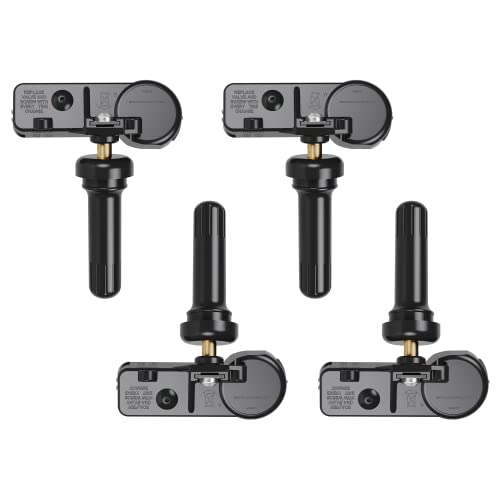
This CDWTPS offering provides a 4-pack of GM-compatibile TPMS sensors. It is described as a prefect replacement with pre-programmed compatibility for GM-branded vehicles manufactured after 2006, including GMC, Chevy, Buick, and Cadillac lines. The batteries are designed for longevity (up to 10 years under normal use) and to withstand high temperatures up to 125 degrees. Importantly, these sensors come pre-programmed for specific makes/models and require activation via a scan tool rather than user programming, reducing setup time for technicians.
Consider this option when servicing a GM-dominated fleet or a shop dealing with frequent GM vehicle TPMS replacements. The emphasis on no programming required can simplify workflow, though some vehicles may still require a relearn procedure to match the original sensor IDs to the wheel position.
Masoll Gen 2 TPMS Sensor (4-Pack)
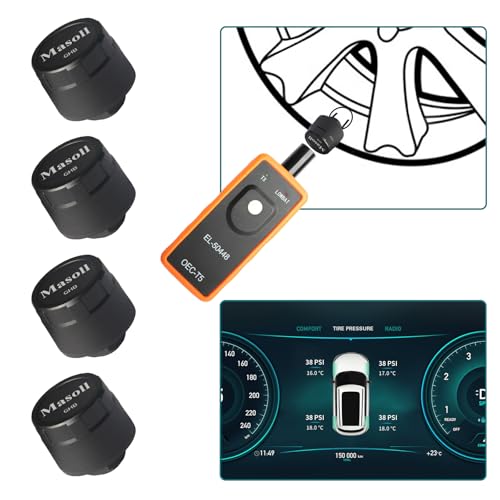
Masoll’s Gen 2 TPMS sensors are designed to broaden vehicle coverage and improve transmission performance. This Gen 2 upgrade targets compatibility with a wide range of GM brands and vehicle types, including trucks and SUVs, making it suitable for mixed fleets. The kit typically includes additional components like a relearn tool and allows DIY installation by screwing the sensor into the tire valve and syncing to the ECU using the included TPMS programming tool. The Gen 2 line emphasizes stronger signals and a robust build to support diverse vehicle applications.
Key advantages include easy DIY installation, broad coverage, and a design that aims to minimize installation time. Users should verify compatibility with their specific vehicle list and be prepared to perform a relearn procedure if required by the vehicle’s TPMS system.
Tymate TM7 Tire Pressure Monitoring System

The Tymate TM7 system offers wireless monitoring with four external sensors and a six-alarm setup. It uses a color LCD display that remains legible in various lighting conditions. The TM7 is designed for DIY enthusiasts and offers a plug-in power solution via the vehicle’s 12V outlet, reducing wiring complexity. An added dual USB charging feature supports charging mobile devices, making it practical for longer trips or professional fleets that require additional on-board utilities. The system emphasizes real-time pressure and temperature data with multiple alert options.
With its emphasis on ease of use, robust alerting, and a bright display, the Tymate TM7 is a strong option for those seeking a complete, user-friendly TPMS solution outside the factory system. It is particularly useful for older vehicles without factory TPMS or for drivers who want an all-in-one monitoring and charging setup in one device.
Tymate TM2 RV TPMS: Solar Charging

The TM2 model from Tymate targets RVs, trailers, and larger vehicle configurations. It offers solar charging as a primary power source, with an optional USB or cigarette lighter charging path when solar is unavailable. The kit typically includes four sensors and supports multiple alarm modes similar to other TPMS systems, with a focus on RV/trailer compatibility. The TM2’s solar capability is a standout feature for off-grid or long-travel scenarios where battery maintenance is critical. It also provides a straightforward setup for monitoring tire pressure and temperature across a mobile fleet.
Ideal for RV owners and trailer operators, TM2 emphasizes continuous power, low maintenance, and clear alarms. It is important to confirm sensor placement and relearn requirements for your specific rig, as RV TPMS configurations can differ from standard automotive systems.
Buying Guide: Key Purchase Considerations
- Vehicle compatibility: Confirm frequency (315 MHz/433 MHz), OE match, and vehicle year range. Some sensors are pre-programmed for GM vehicles, while others require Autel or universal programming tools.
- Programming requirements: Decide between pre-programmed vs. programmable sensors. Pre-programmed units save time but may require relearn steps. Programmable sensors offer flexible cross-vehicle use but demand the right toolchain.
- Installation method: Press-in rubber valve vs. metal valve designs affect installation time and durability in different tire setups.
- Power and battery life: External sensors, solar charging, battery longevity, and IP rating (water resistance) influence long-term reliability in varying climates.
- Alarm and display features: Look for multi-alarm modes, real-time monitoring, and easy-to-read displays—especially useful for DIY users and fleet operators.
- Warranty and support: Check after-sales support from the manufacturer or distributor, especially for exclusive support or US-based assistance.
- Relearn requirements: Some vehicles require dealer-level relearn or diagnostic tools. Plan for compatibility with your preferred scanner or service workflow.
- Cost vs. coverage: Compare the number of sensors per pack, included tools, and potential need for relearn gear to balance upfront cost with service speed.
In choosing aftermarket TPMS sensors, consider your typical vehicle mix, whether you service RVs or standard passenger cars, and the level of DIY capability you want. A single, widely compatible SKU paired with reliable programming and support can significantly streamline TPMS service in a busy shop or for a proactive DIYer.