Choosing the right engine assembly lube is essential for protecting metal surfaces during initial startup and break-in. The following selections offer high-quality lubricants designed to prevent scuffing, reduce wear, and support optimal cam and bearing seating. This guide compares five top-rated products from reputable brands to help you select the best fit for gasoline and diesel engines during assembly and initial startup.
| Product | Brand | Key Benefit |
|---|---|---|
| Permatex 81950 Ultra Slick | Permatex | Strong adhesion, OEM-grade lubrication |
| Hot Shot’s Secret Adrenaline | Hot Shot’s Secret | Superior cling and wear protection |
| PRM 81950 Ultra Slick | Permatex | OEM-spec lubrication for startup |
| Lucas Oil 10153 | Lucas Oil | Eliminates dry starts; pre-lubricates bearings |
| Red Line 80319 | Red Line | Advanced synthetic formulation; minimizes wear |
Permatex 81950 Ultra Slick Engine Assembly Lube

Permatex Ultra Slick is a proven engine assembly lube designed to adhere to component surfaces, protecting bare metal during initial startup and break-in. The formula is built to meet OEM performance specs for engine assembly lubricants, which is critical when initiating a rebuilt or newly assembled engine. Proper lubrication of metal mating surfaces reduces the risk of scuffing and galling as the engine reaches its first few revolutions. With a 4 oz bottle, it’s sized for personal rebuild projects and shop use, offering a reliable coating that remains tacky during critical startup moments.
Key features include high-quality formulation and surface adhesion, ensuring the lubricant remains where it’s needed during the crucial startup phase. It’s compatible with typical engine assembly procedures and supports long-term credibility as an OEM-standard option. For builders seeking a dependable, shop-tested lube that delivers on startup protection, Permatex Ultra Slick provides a balanced blend of tackiness and lubrication without overdoing the slip, enabling smooth cam and bearing seating as the engine comes to life.
Hot Shot’s Secret Adrenaline Assembly Lubricant
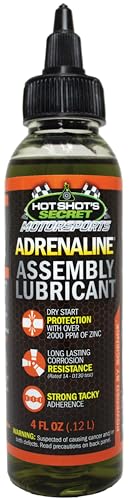
Hot Shot’s Secret Adrenaline Assembly Lubricant is formulated for maximum protection during break-in. It delivers strong tackiness and rapid solubility, helping it cling to critical surfaces such as camshaft lobes, bearing surfaces, fasteners, and studs. The formulation emphasizes wear resistance, aiming to reduce friction and extend engine life from the very first startup. This 4 oz option is designed to integrate with a broad range of break-in oils, providing a reliable barrier against scuffing and initial wear in both gasoline and diesel engines.
In practice, Adrenaline’s high-adhesion profile supports a controlled lubrication film during startup, which is especially beneficial for engines with complex valve trains and tight tolerances. Its packaging and efficacy have made it a popular choice among enthusiasts and professionals who value robust protection and ease of use. When selecting an assembly lube, the product’s compatibility with the chosen break-in oil and engine type is an important consideration, and Adrenaline is positioned to perform well in mixed lubricants and standard break-in procedures.
PRM 81950 Ultra Slick Engine Assembly Lube

PRM 81950 Ultra Slick offers a similar formulation to Permatex’s Ultra Slick, focusing on surface adhesion to prevent scuffing and galling during initial start-up. The product is described as a high-quality engine assembly lubricant designed to meet OEM performance specs, which is important for builders seeking compatibility and proven performance with engine components during assembly. The ability to properly lubricate metal mating surfaces before starting a rebuilt or new engine is emphasized, supporting reduced wear during the critical break-in window.
For engine builders prioritizing a dependable, OEM-aligned option, PRM 81950 Ultra Slick provides a familiar, straightforward solution that aligns with common assembly practices. It’s suitable for a range of engines and can be used as part of a complete lubrication protocol that includes pre-lube and break-in steps. Users should verify compatibility with their specific engine design and startup procedure to maximize protection and longevity.
Lucas Oil 10153 High Performance Assembly Lube

Lucas Oil 10153 High Performance Assembly Lube provides a practical solution for engine builders seeking reliable pre-lubrication for bearings, cams, lifters, and valve trains. The product is highlighted for eliminating dry starts and is positioned as ideal for engine building projects. It’s designed to pre-lube critical components before startup, helping to ensure proper lubrication across moving parts as the engine breaks in. Lucas Oil emphasizes compatibility with common engine oils and the need for consistent film formation during initial startup.
Engine builders may favor Lucas 10153 for its recognized brand heritage and emphasis on preventing startup friction. The lube supports a controlled break-in process and is adaptable to a variety of engine types. As with any assembly lubricant, following recommended application guidelines and integrating it into a holistic break-in plan is essential for achieving optimal results and protection during the first hours of operation.
Red Line 80319 Liquid Synthetic Assembly Lube

Red Line 80319 offers a liquid synthetic assembly lube designed to prevent metal-to-metal contact and wear before lubrication is fully established. This convenient liquid chemistry mirrors the quality of Red Line’s popular paste formulations and is formulated to avoid plugging filters after the first engine start-up. The liquid nature can simplify coating delicate or hard-to-reach surfaces and provides a film that remains effective during early engine operation. It’s positioned as a modern alternative to traditional pastes and greases for assembly.
Consider Red Line 80319 if you want a contemporary synthetic solution that emphasizes filtration compatibility and reliable protection during startup. It’s suitable for a broad range of engines and aligns with performance-minded builds where precise lubrication control during break-in is critical. As with all assembly lubes, adherence to engine-specific break-in procedures will help maximize the protective benefits.
Buying Guide: Key Considerations For Selecting Engine Assembly Lube
When choosing an engine assembly lubricant, several factors influence performance and outcomes. First, assess compatibility with your engine type and the break-in oil you plan to use. Some lubes are designed to adhere firmly to metal surfaces, making them ideal for low-lubricity start-ups, while others emphasize faster solubility with the oil being used. Consider whether you need a heavy tacky film for camshafts and valve trains or a lighter film for easier engine startup and filtration.
Second, evaluate adhesion versus clean-up requirements. A lubricant that clings well to surfaces can reduce initial wear but may require more thorough flushing to clear residues later in maintenance. Third, consider OEM alignment. Lubes that meet OEM performance specs tend to support standardized break-in procedures and component tolerances, reducing risk during the first hours of operation. Fourth, volume and ease of application matter; smaller bottles suit hobby builds, while larger containers fit professional shops. Finally, consider the brand’s reputation, documented performance, and user reviews, as consistent field results improve confidence in startup reliability.
In practice, many builders select a primary assembly lube that offers strong adhesion for initial protection and pair it with a compatible break-in oil to optimize film formation. Some prefer a second option with high wear protection to safeguard bearing surfaces during the most critical startup window. A balanced approach—covering adhesion, wear resistance, and compatibility—helps ensure a smooth engine start and a solid break-in, regardless of engine size or fuel type.