Finding the right tire pressure gauge can improve fuel efficiency, tire life, and safety. This guide highlights five top-rated options that cover a wide range of needs—from pro-grade digital gauges to rugged analog models. Each pick includes notable accuracy, user-friendly features, and practical considerations to help you choose the best fit for cars, motorcycles, trucks, and more.
Summary of chosen products:
- ETENWOLF T300 Digital Tire Pressure Gauge – 3-200 PSI, ANSI B40.7 Grade 2A, replaceable batteries
- ETENWOLF Tire Pressure Gauge for Cars – 0-75 PSI, ANSI B40.1 Grade A, glow dial
- JACO ElitePro Digital Tire Pressure Gauge – 0-100 PSI, ANSI 2A, Dual sensors
- JACO ElitePro Tire Pressure Gauge – 0-100 PSI, robust build, built-in bleeder
- AstroAI Digital Tire Pressure Gauge – 0-150 PSI, backlit LCD, multi-unit
ETENWOLF T300 Digital Tire Pressure Gauge

The ETENWOLF T300 offers a wide measurement range of 3-200 PSI and is calibrated to ANSI B40.7 Grade 2A with a precision of approximately ±0.5% under normal conditions. It supports extreme temperatures (-4°F to 130°F) thanks to an AI-assisted thermal compensation chip, ensuring reliable readings in both hot and cold environments. While a Presta valve adapter is not included, the unit’s versatility makes it suitable for most automotive applications and can be used for bicycles with the appropriate accessory. Replaceable AAA batteries simplify maintenance and uptime for frequent users.
Key considerations:
- Pros: Broad PSI range, high-grade calibration, weather-robust performance, replaceable power source.
- Cons: Presta adapter sold separately; digital displays may require occasional calibration checks.
- Ideal for: General car maintenance, service bays, fleets that operate in varied climates.
ETENWOLF Tire Pressure Gauge for Cars 0-75 PSI

This model is calibrated to ANSI B40.1 Grade A with a readout accuracy of ±1% of span and a measurement range of 0-75 PSI. The large glow dial enhances readability in dark conditions, making it a practical pick for night-time inspections or dim garages. Its compact design suits quick checks for cars, motorcycles, trucks, SUVs, and ATVs. The emphasis on readability and durability makes it a dependable option for everyday maintenance and field service.
Key considerations:
- Pros: Clear glow dial for low-light use, durable construction, straightforward operation.
- Cons: Lower maximum PSI than some digital gauges; relies on manual readings.
- Ideal for: Regular car maintenance, quick roadside checks, and dim garage environments.
JACO ElitePro Digital Tire Pressure Gauge
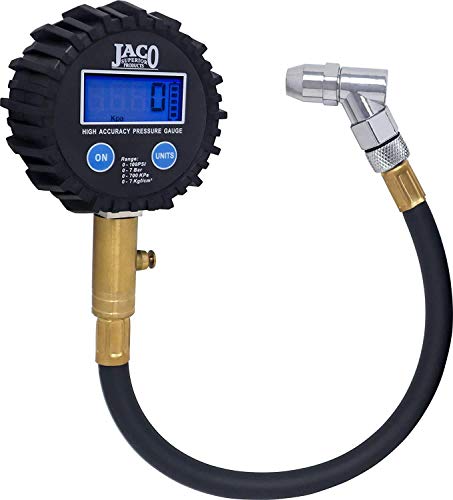
The JACO ElitePro Digital gauge uses dual pressure sensors and maintains accuracy up to 100 PSI with a ±0.50% full-scale precision, delivering precise readings and a professional-grade experience. The tool features a robust, all-brass and steel build, a protective guard, and a 10″ HybridFlex air hose with a 360-degree swivel chuck. An integrated air bleeder allows real-time deflation without resetting the gauge, making it highly adaptable for cars, trucks, motorcycles, bikes, and RVs. The display locks readings until reset, providing stable results during use.
Key considerations:
- Pros: Shop-grade accuracy, durable construction, convenient bleeder valve, versatile hose and chuck.
- Cons: Higher price point typical of professional tools; some users may prefer battery-powered gauges.
- Ideal for: Auto shops, DIY enthusiasts, fleet maintenance, and professionals needing repeatable precision.
JACO ElitePro Digital Tire Pressure Gauge – 200 PSI

Designed for professionals with higher pressure demands, this ElitePro model extends readings to 200 PSI using dual sensors with ±0.50% FS accuracy. It shares many features with the 100 PSI version: a solid brass and steel build, protective guard, 10″ HybridFlex hose, and a 360-degree swivel chuck. The built-in air bleeder remains a staple for precise deflation, and the measurement display holds results until reset for accurate timing in busy work environments. This gauge is a strong fit for vehicles and equipment requiring higher tire pressures, including some trucks and RVs.
Key considerations:
- Pros: Higher PSI range, durable construction, precise and stable readings, user-friendly deflation feature.
- Cons: Slightly bulkier and heavier than some pocket models.
- Ideal for: Fleets with high-pressure tires, trucks, and professional repair settings.
AstroAI Digital Tire Pressure Gauge

The AstroAI digital model measures 0-150 PSI with accuracy within ±1 PSI and offers a backlit LCD for visibility in low-light conditions. It supports four units (PSI, Bar, Kgf/cm2, KPa), enabling easy adaptation for cars, trucks, and bikes. The combination of a backlit display and professional calibration makes it a reliable, user-friendly option for everyday users who want quick, accurate readings without switching tools. This model balances value with capability in a compact digital package.
Key considerations:
- Pros: Four-unit versatility, backlit display, reliable calibration, compact design.
- Cons: Battery replacement may be required over time; some users may prefer a larger display.
- Ideal for: Everyday vehicle maintenance, compact tool kits, and family cars.
Buying Guide: Key Purchase Considerations for Tire Pressure Gauges
When selecting a tire pressure gauge, consider accuracy, range, readability, and durability. Digital gauges typically offer higher precision and features like auto-lock, bleeder valves, and multi-unit displays, while analog models excel in simplicity and battery-free operation. Think about your typical PSI needs, climate, and how you’ll use the tool—garage, roadside emergencies, or fleet maintenance. Compatibility with valve types (Schrader and Presta) matters for bicycles. Look for:
- Accuracy: ANSI B40.1 Grade A or B40.7 Grade 2A standards indicate reliable measurements.
- PSI Range: Choose based on your vehicle type; trucks and RVs often require higher ranges (up to 200 PSI).
- Display and readability: Glow dials or backlit LCD screens improve visibility.
- Durability: Brass and steel construction with protective housings withstand drops and weather.
- Ease of use: Built-in bleeder valves simplify deflation without resetting the display.
- Maintenance: Battery-powered models need easy battery replacement; analog models require less upkeep.
Additional Perspectives: How to Use and Maintain Your Gauge
To maximize accuracy, store gauges in a cool, dry place and avoid dropping them. Calibrate periodically if the gauge is digital, or test against a known standard at least yearly for professional use. For bicycle applications, verify whether adapters are available and compatible with your valve types. If you operate in extreme temperatures, prioritize devices with thermal compensation. Finally, consider keeping a couple of gauges—one for vehicles and a compact spare for emergencies—to ensure you’re never without a reliable reading.