Finding the right rust remover for automotive needs can prevent costly metal damage and extend the life of components. This article highlights top options that are effective on auto parts, tools, and related metal surfaces while keeping safety in mind. Each product entry includes how it works, key benefits, and practical usage notes to help readers compare approaches—from water-based rust removers to gel and soak formulations. Use this guide to identify a solution that fits your project, whether you’re detailing a vehicle, restoring antique parts, or maintaining tools.
| Product | Brand | Size / Type | Key Benefit |
|---|---|---|---|
| CRC Evapo-Rust, Heavy-Duty Rust Remover | Evapo-Rust | 32 oz, Water-based | Non-corrosive, reusable, acid-free rust removal |
| Evapo-Rust ER012 Heavy Duty | Evapo-Rust | 128 oz | Low-odor, non-toxic, easy to use on metal parts |
| Adam’s Iron Remover (16oz) | Adam’s Polishes | 16 oz | Removes iron fallout safely on painted surfaces |
| Rust-Oleum Rust Dissolver Jelly | Rust-Oleum | 8 oz | Clings to rusty surfaces; quick rust dissolution |
| CLR Calcium, Lime & Rust Remover | CLR | 80 oz | Multi-surface rust and mineral buildup remover |
CRC Evapo-Rust Heavy-Duty Rust Remover

Evapo-Rust offers an easy, reusable method for removing rust from automotive parts, hardware, and tools without scrubbing. The water-based formula is non-acidic and non-toxic, making it suitable for various metal parts in the shop or home. Users can submerge or soak items to lift rust to bare metal with minimal effort. This approach reduces the risk of pitting or damage caused by abrasive methods and is gentler on delicate components when used as directed.
Evapo-Rust ER012 Heavy Duty (128 oz)

This larger 128-ounce bottle expands rust-removal capabilities for bigger projects or repeated use. The solution remains water-based and non-toxic, designed to lift rust from automotive parts, tools, cast iron cookware, and other metal surfaces without harsh acids. It provides a convenient, low-odor option for garages and professional settings where large-volume rust removal is needed, while preserving the underlying metal by avoiding corrosive residues.
Adam’s Iron Remover

Adam’s Iron Remover targets bonded iron deposits that can damage paint finishes and accelerate corrosion. While designed for car detailing, it’s applicable to exterior metal components and wheels where iron fallout presents a risk to finish integrity. The product is pH-neutral and intended to be safe on clear coats and paint, though users should avoid overspray on trim or exposed plastic. This makes it a practical choice for pre-wash prep before claying, waxing, or sealing a vehicle’s surface.
Rust-Oleum Rust Dissolver Jelly

This jelly formula clings to vertical or horizontal metal surfaces, making it useful for heavy, stubborn rust on tools, grills, and automotive components. It dissolves rust in minutes with minimal scrubbing and rinses clean, leaving a ready surface for painting or coating. For best results, follow with a primer or protective finish to prevent future oxidation, especially on outdoor tools or exposed engine components.
CLR Calcium, Lime & Rust Remover

CLR offers a versatile rust remover suitable for multiple surfaces, including metal, porcelain, and certain fixtures. The 80-ounce bottle delivers a low-volume option for households and small shops needing a general-purpose cleaner that targets mineral buildup in addition to rust. When used on automotive components, ensure compatibility with the surface and follow label directions to avoid potential damage to coatings or finishes.
RUST BULLET Metal Blast
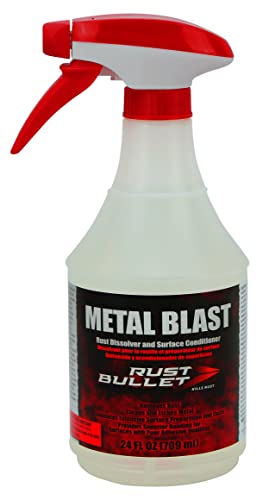
RUST BULLET Metal Blast is designed as both a rust remover and metal prep product. It helps remove contaminants and prepares metal surfaces for primer and paint, making it suitable for automotive restoration work where good adhesion is critical. The product can be sprayed, rinsed, or wiped off, offering flexibility for different project sizes and surface geometries. It is particularly useful to ensure bare metal readiness prior to coatings.
WD-40 Specialist Rust Remover Soak

WD-40 Specialist Rust Remover Soak is a one-gallon soak designed to dissolve rust from old metal parts without aggressive scrubbing. Its biodegradable formulation aims to reduce harsh chemical exposure while delivering effective cleaning for parts that can be immersed. It’s positioned for heavy projects and parts that are difficult to access with manual methods, offering an industrial-strength option with simpler handling in workshops.
Rust-Oleum Whink Rust Stain Remover

Whink Rust Stain Remover is primarily a stain remover for iron-related marks on white surfaces, toilets, and fabrics. While not a dedicated automotive rust remover, it can help address incidental rust stains encountered during vehicle maintenance or cleaning. It is best used for surface stains rather than restoring heavily rusted metal, but it can be a handy supplementary product in a comprehensive rust remediation kit.
Buying Guide: Key Purchase Considerations
- Project type and surface compatibility: Automotive components vary from bare metal to painted or coated surfaces. Choose rust removers that are safe for the specific metal and coating to avoid damage or discoloration.
- Formulation and usage: Water-based, acid-free solutions are typically safer for hobbyists and indoor use, while gels or heavy-duty liquids may be required for stubborn rust or vertical surfaces. Submersion-friendly solutions suit larger parts, while gels work well for vertical applications.
- Ease of use and safety: Non-toxic, low-odor formulas reduce safety concerns in home garages. Always follow label directions, wear protective gear, and rinse thoroughly after treatment.
- Reusability vs. single-use: Some options are reusable or designed for multiple cycles, which can reduce long-term costs and waste for frequent rust remediation.
- Surface preparation and finishing: After rust removal, consider sealants, primers, or coatings to prevent future oxidation. Proper surface prep improves coating adhesion and longevity.
- Environmental considerations: Biodegradable and non-corrosive formulas minimize environmental impact, while some products require careful disposal as per local regulations.
- Project scale: For large parts or frequent tasks, larger volumes (e.g., 128 oz or more) may be more economical and convenient.