Choosing the right battery for trolling motors is essential for reliable, long-lasting performance on the water. This guide reviews five top 12V options designed for marine use, RVs, and solar back-ups, highlighting capacity, weight, BMS protection, and cold-weather performance. Each product is evaluated for trolling motor compatibility, durability, and ease of installation to help anglers and boaters select a solution that fits their vessel.
style=”font-weight:bold;”>Summary of Featured Products
| Product | Brand | Capacity | Key Benefit |
|---|---|---|---|
| 12V 100Ah LiFePO4 Battery | Eiiev | 100Ah | High cycle life and light weight with strong run-time |
| Newport 12V 50Ah Deep Cycle | Newport Vessels | 50Ah | Lightweight, sealed AGM for reliability |
| Litime 12V 100Ah LiFePO4 | Litime | 100Ah | Low-temp protection, up to 15000 cycles |
| LithinEng 12V 100Ah LiFePO4 | LITHINENG | 100Ah | Bluetooth monitoring and robust protection |
| CHITOLI 12V 100Ah LiFePO4 | CHITOLI | 100Ah | Low weight with smart BMS for safe operation |
style=”margin-top:1em;”>Eiiev 12V 100Ah LiFePO4 Battery for Trolling Motors

The Eiiev 12V 100Ah LiFePO4 battery features a built-in 100A BMS and an extended lifecycle, making it a strong option for trolling motors, yachts, and RV use. The battery claims thousands of deep cycles depending on depth of discharge, with a clear emphasis on longevity compared with lead-acid alternatives. A flat discharge curve helps sustain voltage higher than 12.8V for a large portion of the usable capacity, translating to longer runtime per charge. Its lighter weight—roughly 24.25 pounds per module—helps reduce overall boat ballast and ease handling during installation and maintenance. The design supports outdoor camping power and straightforward installation, with the standard LiFePO4 safety advantages such as no memory effect and broad operating temperatures.
Key aspects to consider: high cycle life, relatively light weight, and the built-in BMS protection against overcharge, over-discharge, and temperature fluctuations. The product’s emphasis on 95% capacity utilization echoes a strong runtime improvement over lead-acid options, especially in casual, sport, or multi-day boating scenarios.
style=”margin-top:1em;”>Newport Vessels 12V 50Ah Deep Cycle AGM Battery

This Newport Vessels deep cycle battery is a lightweight, sealed AGM lead-acid option designed for trolling motors and marine use. Weighing around 32 pounds, its sealed construction provides leak-proof operation and durability in wet environments. The AGM technology offers reliable performance with minimal maintenance, making it a practical choice for boaters who prioritize straightforward installation and proven, drop-in compatibility with trolling motors. The 12V system pairs well with standard marine electronics and accessories, while its sealed design helps reduce worrying about corrosion and spills.
Considerations include weight vs. capacity and the trade-off between heavier lead-acid batteries and their lower upfront cost compared with LiFePO4 alternatives. AGM options remain appealing for boaters seeking cost-effective, dependable solutions without the need for advanced BMS monitoring, though they require careful charging to avoid sulfation over time.
style=”margin-top:1em;”>Litime 12V 100Ah LiFePO4 Battery (Group 31)
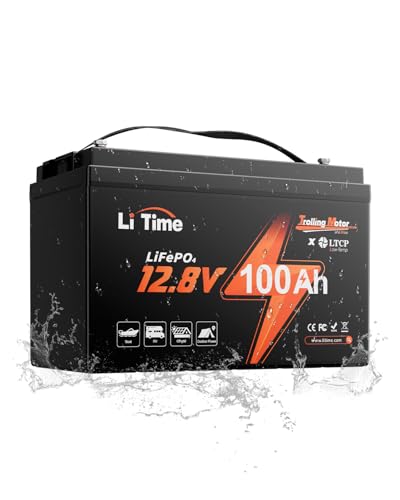
The Litime 12V 100Ah LiFePO4 Battery emphasizes cold-weather protection with smart low-temperature management, stopping charging below 32°F and discharging below -4°F to prevent cold damage and extend life. It includes a built-in 100A BMS and is notably lighter than traditional lead-acid equivalents, helping reduce weight in a boat’s battery bank. The battery is designed for 12V-36V motors and offers ABYC E-13 standard compatibility with extra protections against dust, water, and salt spray. With up to 15000 deep cycles at favorable DoD, it targets long-term power reliability for demanding marine use.
Users should assess the need for Bluetooth or remote monitoring features and ensure their charging system supports LiFePO4 chemistry. The lighter weight and higher cycle life can justify higher upfront costs for serious anglers and boaters seeking extended runtime between charges.
style=”margin-top:1em;”>Litime 12V 100Ah LiFePO4 Battery (Group 31) with Bluetooth

This LiFePO4 model adds Bluetooth monitoring to the LiTime lineup, enabling real-time battery management and status checks from a mobile device. Features include auto-connect, discharge control, and system checks for ongoing reliability on boating adventures. The Low-Temp Protection remains a standout feature, ensuring safe operation in cool climates. The battery’s protection suite includes overcharge, over-discharge, and short-circuit safeguards, along with IP65 dust and water resistance for harsh marine environments.
The Bluetooth capability supports proactive maintenance and situational awareness, reducing downtime and enabling better trip planning. Potential buyers should verify compatibility with their trolling motor controller and any app requirements for monitoring.
style=”margin-top:1em;”>Litime 12V 100Ah LiFePO4 Battery (Group 31) Dual Pack

This two-pack LiFePO4 option from Litime doubles the available capacity for more demanding trolling motor setups or extended boating sessions. Attributes include ABYC E-13 compliant BMS, low-temperature protection, and significant weight savings compared with lead-acid dual-battery configurations. The dual-pack design is ideal for boats requiring longer run times or for systems that demand balanced battery banks with consistent voltage under load.
Prospective buyers should consider the total system load, charger compatibility, and the physical footprint of the two-pack arrangement within the boat’s battery compartment.
style=”margin-top:1em;”>CHITOLI 12V 100Ah LiFePO4 Battery (Group 24)

CHITOLI’s 12V 100Ah LiFePO4 battery uses Group 24 dimensions and a high energy density with a built-in 100A BMS to manage charging, discharging, and safety controls. The battery is lighter than lead-acid equivalents and aims to provide a drop-in replacement for RV, trolling motors, and marine applications. It emphasizes versatility for energy storage and auxiliary power, with smart BMS features to prevent overcharging and short circuits.
Buyers should confirm physical fitment in their existing battery boxes and ensure that their charging equipment supports LiFePO4 chemistry. The Group 24 sizing can be advantageous for mid-sized boats with restricted space but may require adapter considerations for certain battery trays.
Buying Guide: Key Purchase Considerations
- Battery chemistry: LiFePO4 offers longer life, lighter weight, and safer operation than traditional lead-acid. AGM and flooded lead-acid remain viable for budget-minded buyers or older systems that don’t require advanced monitoring.
- Cycle life and depth of discharge: Look for batteries rated at thousands of cycles with favorable DoD (e.g., 80-100% DoD) to maximize runtime per charge and lifespan.
- Weight and size: Group size (e.g., Group 31 or Group 24) and weight impact boat handling, mounting, and regulatory ballast considerations.
- Built-in BMS and protections: A robust BMS protects against overcharge, over-discharge, short circuits, and temperature extremes, which is crucial for marine environments.
- Temperature performance: Low-temperature cutoffs help prevent battery damage in cold climates; ensure the system supports your regional conditions.
- Monitoring and connectivity: Bluetooth or app-based monitoring provides real-time status, which can simplify maintenance and trip planning.
- Charging compatibility: Verify that your charger, solar setup, and motor controller are compatible with the battery chemistry and BMS requirements.
- Warranty and service: Check manufacturer warranties and availability of replacement packs or components for long-term peace of mind.
When selecting a trolling motor battery, weigh runtime needs against weight and cost. For frequent, high-usage boating or marine work, LiFePO4 options with high cycle life, low self-discharge, and built-in protection typically offer the best long-term value. AGM and lead-acid choices may suit lighter-duty use or budget-conscious setups where maximum initial savings are a priority.