Choosing a dash camera involves weighing video quality, field of view, night vision, storage options, and ease of use. The following five models are among the most relevant options for American drivers, offering 4K or multi-channel recording, GPS, WiFi, and parking modes. This guide highlights each product’s strengths and practical considerations to help you compare features and make a confident purchase.
| Product | Key Features | Video Resolution |
|---|---|---|
| TERUNSOUl 4K+4K Dash Cam Front and Rear | Free 128GB card, GPS, G-Sensor, 170° front, 4K/4K | Front 3840×2160; Rear 3840×2160 |
| ROVE R2-4K DUAL Dash Cam | 5G WiFi, STARVIS 2, dual 4K/1080P, app control | Front 4K; Rear 1080P |
| TERUNSOUl 4K+4K+1080P 3 Channel | 3-channel, cabin view, GPS, IR cabin night vision | Front 4K; Rear 4K; Cabin 1080P |
| REDTIGER 4K Dash Cam F7NP | STARVIS 2, GPS, 5.8GHz WiFi, 170°/140°, parking mode | Front 4K; Rear 1080P |
| IIWEY N5 4 Channel Dash Cam | 360° coverage, IR night vision, 5G WiFi (no GPS) | Multiple 1080P streams |
Use this guide to compare compatibility with your vehicle, storage needs, and preferred connectivity options. Each option offers a balance of front-view clarity, reliable night recording, and practical features such as loop recording and G-sensor technology for accident evidence.
Terunsoul 4K+4K Front and Rear Dash Cam
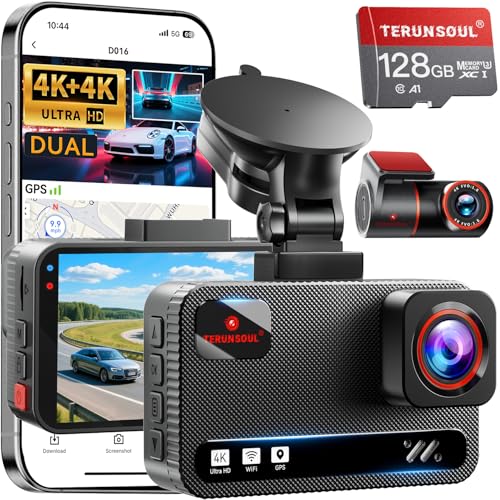
The TERUNSOUl model records in dual 4K across front and rear cameras, with 170° wide-angle coverage to capture multi-lane roads. A pre-installed 128GB card supports loop recording and instantaneous emergency-locking via a lock button. The system uses advanced night-vision capabilities through WDR enhancements and large-aperture lenses (F1.5 front, F1.8 rear) to improve low-light clarity. It supports microSD cards up to 512GB for extended evidence storage.
ROVE R2-4K Dual Dash Cam

ROVE’s R2-4K pairs a 4K front camera with a 1080P rear camera, delivering 4K front detail and reliable rear footage. It uses a Sony STARVIS 2 sensor for vivid daytime and night footage, aided by F1.5 front and F1.8 rear apertures. The device features ultra-fast 5G WiFi with app-based access for quick downloads, sharing, and firmware updates—helpful for fast evidence review and documentation after incidents.
Terunsoul 4K+4K+1080P 3 Channel Dash Cam
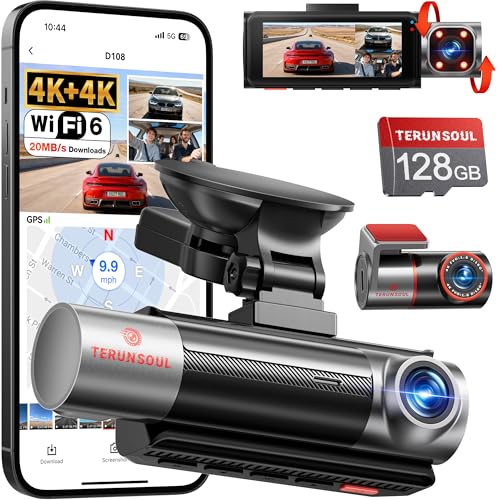
This 3-channel dash cam expands protection with front, rear, and cabin recording. The front and rear capture 4K content, while the cabin records at 1080P, offering a near-360° surveillance view. It includes a pre-loaded 128GB card and supports up to 512GB for long-term storage. Auto IR night vision and a built-in GPS in conjunction with G-sensor ensure critical footage is preserved in the event of a collision.
REDTIGER 4K Dash Cam F7NP

REDTIGER’s F7NP offers 4K front and 1080P rear recording with STARVIS 2 sensor technology and WDR for improved night performance. The camera includes GPS logging, 5.8GHz WiFi for fast data transfer, and a 170° front lens with a 140° rear lens. A 24H parking mode ensures continuous protection when the vehicle is parked. The device also supports voice and touch control for convenient operation and emergency video locking.
IIWEY N5 4 Channel Dash Cam

IIWEY’s N5 provides a 360° all-around view, combining front, rear, left, and right cameras with 1080P streams for comprehensive coverage. It includes 170° front and 150° side angles, plus an internal IR night vision system. Note: GPS is not included, and the rear camera requires wiring to the front unit. A 128GB SD card is pre-installed, and the dash cam connects via built-in WiFi with app control for playback and settings.
Buying Guide: Key Purchase Considerations
When evaluating dash cameras, consider video quality, field of view, and night performance as foundational factors. A 4K front camera with a wide-angle lens generally provides more recognizable detail, such as license plate information, at longer distances. Multi-channel options (front+rear or triple-channel with cabin) add coverage for a fuller evidence trail but require larger storage and careful power management.
Storage capacity, including the size of the included microSD card and the maximum card supported, determines how long you can retain footage before automatic overwrites occur. Loop recording is essential to minimize gaps in evidence, while a G-Sensor or impact detection ensures important clips are locked from deletion after a collision. Consider whether GPS logging for route and speed data is needed, and whether built-in GPS is included or accessible via smartphone apps.
Connectivity choices affect usability. Built-in WiFi (2.4GHz or 5GHz) enables fast transfers to mobile devices but can drain the camera’s power. Bluetooth is less common in dash cams but can simplify setup in some models. App compatibility and firmware update capability over the air help maintain features and security over time. Lastly, parking mode and energy requirements are important for long-term use; some models support hardwiring to a vehicle’s power supply for continuous operation.
For buyers prioritizing robust evidence with minimal blind spots, multi-channel cameras with infrared cabin recording, GPS data, and a user-friendly app provide a strong balance between reliability and convenience. If you primarily need daytime driving footage with quick sharing, a higher-frame-rate 4K front camera paired with a capable app may suffice. Always verify card compatibility and storage expansion options to match your typical driving patterns and legal requirements in your area.