Engine oil treatments can help reduce wear, quiet engine operation, and boost efficiency. This guide highlights five popular options and contrasts their features to help American drivers choose the right additive for gas and diesel engines, transmissions, and differentials. Each product below is designed to reduce friction, extend engine life, and potentially improve horsepower and fuel economy.
style=”display:none;”>Summary Table of Chosen Products
| Product | Brand | Size | Key Benefit |
|---|---|---|---|
| Prolube Oil Treatment – 1QT | Prolube | 1 Quart | Reduces wear, lowers noise, improves fuel economy |
| Prolube Oil Treatment – 16oz | Prolube | 16 oz | Power up engine, reduce vibration, save on fuel |
| Liqui Moly MoS2 Anti-Friction | Liqui Moly | 300 ml | High-load film for smoother, quieter operation |
| STP High Mileage Oil Treatment + Stop Leak | STP | 15 fl oz | Anti-wear protection and seal restoration for high-mileage engines |
| Slick 50 Original Engine Treatment | Slick 50 | 32 oz | Ceramic and PTFE protection to reduce friction |
Prolube Engine Oil Treatment 1QT

Prolube’s 1-quart engine oil treatment is designed to maximize performance by increasing horsepower, reducing engine noise, and smoothing vibrations under both daily driving and heavy-duty conditions. Its advanced formula aims to lower friction, help prevent overheating, and support quieter, more efficient engine operation. The product also claims a potential wear reduction of up to 45%, contributing to extended engine life through strengthened lubrication and minimized friction damage. This additive is positioned for use in gas and diesel engines, and is marketed to work with transmissions and differentials as well.
Prolube Oil Treatment 16oz

This 16-ounce Prolube formula mirrors the 1QT option with emphasis on reducing friction, boosting efficiency, and quieting operation. It is designed to lower fuel consumption by improving lubrication, helping engines maintain smoother performance and better fuel economy over time. The product reiterates significant wear reduction potential and extended engine life through improved lubrication and thermal management. It’s presented as compatible with both gas and diesel engines, and as beneficial for transmission and differential protection as part of an overall lubrication strategy.
Liqui Moly MoS2 Anti-Friction Engine Treatment

Liqui Moly MoS2 Anti-Friction Engine Treatment adds a MoS2-based film to engine surfaces, forming a high-load lubricating layer that reduces friction and wear. The product claims improved sound and control at high RPMs, with a universal fit suitable for various engines and components. This additive is positioned to create a durable anti-friction barrier that can enhance smoothness, help maintain engine cleanliness, and support broader performance under demanding conditions.
STP High Mileage Oil Treatment + Stop Leak

STP High Mileage Oil Treatment + Stop Leak is tailored for vehicles with over 75,000 miles. It combines a high-viscosity oil treatment with a stop-leak mechanism intended to rejuvenate seals and gaskets while reducing engine noise and oil consumption. The anti-wear aspect uses a ZDDP additive to protect aging engines by forming a protective barrier between moving parts, helping to maintain performance and reliability in high-mileage scenarios.
STP Ceramic Oil Treatment

STP Ceramic Oil Treatment features a protective ceramic coating that remains after oil changes, offering up to 15,000 miles of protection. The additive enhances lubrication between metal parts to promote smoother, quieter engine operation and helps prevent deposits, contributing to cleaner engine internals over time. This option emphasizes long-lasting protective coating and anti-friction benefits designed for regular engine oil use.
Slick 50 Original Engine Treatment
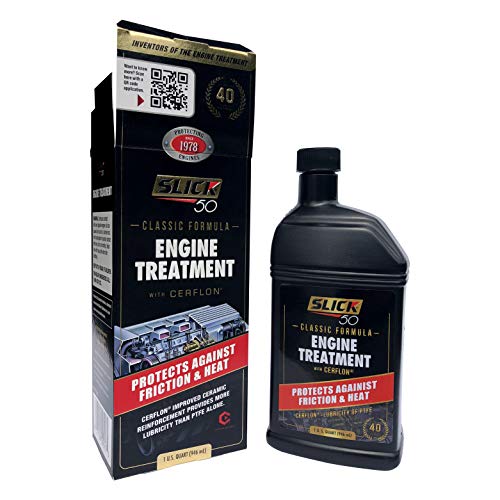
Slick 50 Original Engine Treatment uses CERFLON PTFE technology to reduce friction and wear, supporting improved engine performance. The formula aims to lower internal heat buildup and maintain power and efficiency by creating a protective ceramic/PTFE barrier on engine surfaces. The product is positioned as a long-lasting solution for ongoing protection under high-stress conditions.
Buying Guide: Key Considerations for Engine Oil Treatments
- Engine compatibility: Choose a product specifically marketed for gas or diesel engines, and check whether it is recommended for high-mileage vehicles or synthetic blends.
- Primary benefits: Decide whether you want primarily reduced wear and noise, improved fuel economy, or seal protection for older engines.
- Viscosity and film strength: Consider how a treatment creates a lubricating film (MoS2, PTFE, ceramic) and how that may perform under the engine’s operating temperatures and RPMs.
- Coverage area: Some additives claim benefits for transmissions and differentials in addition to the engine; confirm intended use to avoid unnecessary products.
- Installation and maintenance: Most oil treatments are added with an oil change; verify recommended dosage and whether subsequent changes should follow standard intervals.
- Longevity and wear claims: Look for products with independent tests or credible manufacturer data supporting wear reduction and noise suppression claims.
- All-in-one vs. targeted treatments: For engines with specific issues (noise, sludge, leaks), select a product that addresses the primary concern rather than a general additive.