Engine stop smoke additives help reduce oil burning, seal worn components, and improve overall engine efficiency. This guide highlights five respected options that aim to quiet exhaust, restore compression, and cut down emissions. Each product is designed to work with common gasoline engines and can be used while driving, making them convenient for ongoing maintenance. Below you’ll find quick summaries, detailed product sections, and a buying guide to help you compare performance, compatibility, and application considerations.
| Product | Brand | Key Benefit | Approx. Type |
|---|---|---|---|
| Bardahl NoSmoke + StopLeak | Bardahl | Reduces oil burning and seals leaks | Oil additive |
| BlueDevil Stop Smoke & Engine Repair | BlueDevil | Reduces exhaust smoke and restores compression | Engine additive |
| Liqui Moly Stop Smoke | Liqui Moly | Minimizes blue exhaust smoke | Oil additive |
| LIQUI MOLY Motor Oil Saver | Liqui Moly | Reduces oil consumption and prevents leaks | Oil additive |
| Bar’s Leaks 1000 High Mileage Engine Repair | Bar’s Leaks | Increases compression and stops leaks | Engine repair additive |
Bardahl NoSmoke + StopLeak Motor Oil Additive

Overview
Bardahl NoSmoke + StopLeak is designed to address two common engine issues: oil burning and oil leaks. The formula is described as extra-thick to fill loose tolerances in older engines, which may help reduce smoke and noisy lifters while restoring reliability. It also aims to improve emissions by reducing pollutants in exhaust, which is important for maintaining compliance with certain standards. The product is marketed as a multi-benefit solution for engines with high mileage or aging seals.
How it works
The additive claims to seal empty spaces that develop in engines over time, acting as an oil leak sealer and reducing engine noise. By addressing loose gaps, it may help quiet lifters and improve overall engine feel. It is positioned as both a smoke reducer and a sealant to curb oil leaks, which can contribute to more consistent oil pressure and smoother running.
Compatibility and considerations
Ideal for engines showing signs of burning oil, smoking, or minor leaks. As with any additive, results can vary based on engine design, wear levels, and maintenance history. It is recommended for use with conventional, higher mileage, or oil-burning engines and may not replace mechanical repairs if leaks are extensive.
BlueDevil Stop Smoke & Engine Repair

Overview
BlueDevil Stop Smoke & Engine Repair is designed to address blue and white smoke caused by oil burning while also restoring engine compression. The product emphasizes improving engine performance and fuel efficiency by sealing worn seals and rings. It’s marketed as a maintenance product that can be added to the oil to deliver results while the engine remains in service.
What makes it work
The formula targets worn seals and piston rings by softening and expanding them to reestablish seal integrity. By reducing oil leakage and improving compression, the engine can idle and perform with less smoke and better power output. Users may notice smoother operation and a slight bump in efficiency after continued use.
Usage notes
Because it is designed to work while you drive, it’s suitable for ongoing maintenance on older engines showing smoking symptoms. Users should monitor oil levels and follow manufacturer directions for dosage and interval use. It’s best for engines with visible exhaust smoke and compression concerns linked to wear.
Liqui Moly Oil Smoke Stop

Overview
Liqui Moly Oil Smoke Stop is designed to minimize blue exhaust smoke by sealing wear gaps within engine components. It is formulated to be effective with a wide range of oils used in petrol and diesel engines, including common viscosities. The product emphasizes reducing smoke as a primary goal while supporting engine longevity.
Key features
The additive focuses on sealing gaps and reducing oil burning, which can contribute to lower emissions and improved engine cleanliness. It is presented as a practical solution for engines that regularly emit blue smoke due to wear, especially in high-mileage vehicles or those with older components.
LIQUI MOLY Motor Oil Saver

Overview
Liqui Moly Motor Oil Saver is an oil additive designed to reduce oil consumption by improving the sealing capability of piston rings and valve guides. It also aims to prevent blue, smoky exhaust fumes and protect against leaks caused by elastomeric seals. The product targets traditional and synthetic oil environments and is marketed for a range of engines.
What it targets
The formulation focuses on improving oil retention and sealing in high-mileage or ageing engines, where seals and rings may have degraded gaps. By reducing oil loss and smoke, it supports more consistent oil pressure and performance, potentially extending engine life when used as part of regular maintenance.
Rislone Ring Seal Repair

Overview
Rislone Ring Seal Repair is designed to stop blue exhaust and reduce oil burning by sealing worn pistons and rings. The product includes viscosity modifiers and high-shear polymers to restore seal integrity, with an all-weather formula suitable for hot and cold climates. It supports older engines that may experience blow-by from ring wear.
Performance notes
The blend aims to fill scratches and grooves within cylinder walls, helping to stabilize compression across all cylinders. It is marketed for use with gasoline and diesel engines using conventional, high-mileage, or synthetic oils. As with any additive, results depend on the degree of wear and engine condition.
Bar’s Leaks 1000 High Mileage Engine Repair
Overview
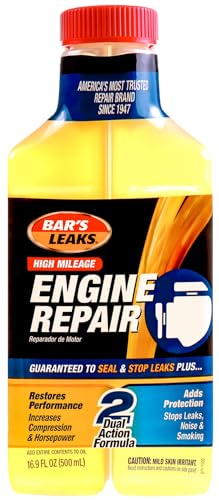
Bar’s Leaks 1000 High Mileage Engine Repair is a multipurpose formula engineered to restore performance by increasing compression and sealing common oil-related leaks. It targets worn cylinders and rings, reduces noise, and aims to curb smoking in high-mileage engines. The product presents as a preventative solution that can help avoid more extensive repairs.
What to consider
Designed for older engines with higher mileage, it emphasizes reinforcing seals and helping to restore lost compression. Users should assess engine condition and consider complementary maintenance steps, such as gasket inspection and oil system checks, to maximize long-term benefits.
Buying Guide: Key Purchase Considerations
When selecting an engine stop smoke additive, consider the following factors to match your vehicle’s needs and driving conditions.
- Engine condition and mileage: High-mileage engines with worn rings or seals are more likely to benefit from seal-restoring additives. For newer engines, a lighter additive may be sufficient.
- Smoke type and cause: If smoking is primarily blue (oil burning) or white (coolant), pick a product targeting that issue. Some products address both emissions and compression concerns.
- Compression goals: If your aim is to restore compression for better power and fuel economy, prioritize products explicitly marketed for compression restoration.
- Viscosity and compatibility: Check your engine oil viscosity and oil type (conventional vs. synthetic) to ensure compatibility with the additive’s formulation.
- Usage pattern: Some additives are designed to work while you drive, while others are best used during a maintenance window. Follow the manufacturer’s dosing instructions carefully.
- Emissions considerations: For vehicles needing to meet or maintain emission standards, choose products that emphasize reducing pollutants in exhaust.
- Safety and warranty: Review any warranty implications and safety guidelines, especially for engines with severe wear or ongoing leaks that may require mechanical repair.
These products offer options across different needs—from sealing leaks and reducing smoke to restoring compression and reducing oil consumption. Always consider an initial test with a small dose in accordance with instructions, monitor oil levels, and plan for mechanical assessment if symptoms persist or worsen.