When working on exhaust systems or any automotive fabrications, choosing the right flux core wire can make a big difference in arc stability, weld quality, and ease of use in outdoor conditions. This article reviews five top flux core MIG wires suitable for exhaust-related welding, including carbon steel and stainless steel options. Each product highlights key performance traits, portability, and the ideal welding scenarios to help you select the best fit for your project.
| Product | Material | Diameter | Weight | Notable Feature |
|---|---|---|---|---|
| YESWELDER Flux Core Gasless MIG Wire | Carbon Steel | .030 in | 2 lb | Self-shielding, low spatter |
| ARCCAPTAIN E308LFC-O Flux Core Wire | Stainless Steel | .030 in | 2 lb | Low splatter, versatile SS grades |
| YESWELDER Stainless Steel Flux Cored MIG Wire | Stainless Steel | .030 in | 2 lb | All-position, portable |
| YESWELDER Flux Core Gasless MIG Wire | Carbon Steel | .035 in | 2 lb | Self-shielding, good for rust/mill scale |
| YESWELDER Flux Core Gasless MIG Wire | Carbon Steel | .035 in | 10 lb | High-output spool, outdoor use |
YESWELDER Flux Core Gasless MIG Wire For Exhaust Tasks

The YESWELDER Flux Core Gasless MIG Wire in .030 inch diameter is designed for mild carbon steel applications, including exhaust fabrication and repair. Its self-shielding design eliminates the need for external shielding gas, a practical benefit when working outdoors or in windy environments often encountered in under-vehicle repairs. The wire features an advanced core formulation that improves arc stabilization and feedability, helping maintain a smooth, consistent weld bead on thin to medium-thickness steel. It also includes deoxidizers to combat light rust and mill scale, making it useful for legacy exhaust systems where surface conditions vary. Users can expect low spatter and full slag formation with straightforward slag removal, contributing to cleaner welds and quicker turnaround during repairs. This 2-pound spool provides enough material for several projects without frequent spool changes, and the wire is well-suited for flat, horizontal, and some vertical welds typically seen in exhaust work.
Key considerations: outdoor work, no shielding gas, good for rusted surfaces, moderate thickness applications, portable and convenient for on-site repairs. Limitations include not being ideal for critical aerospace-grade joints or highly polished finishes where precise control is required. Overall, it offers a balance of reliability, ease of use, and portability for standard exhaust repairs and light fabrication projects.
ARCCAPTAIN E308LFC-O Stainless Steel Flux Core Wire

Designed for stainless steel welding, the ARCCAPTAIN E308LFC-O Flux Core Wire (.030 in, 2 lb) stabilizes the arc with an internal flux core that acts as a shielding agent. This contributes to improved arc reliability and a protective barrier during welding, which is beneficial when working with exhaust components that combine stainless steel and other alloys. It supports all-position welding and minimizes spatter, promoting clean weld formations across flat, horizontal, vertical, and overhead joints. The wire is compatible with multiple stainless grades—304, 304L, 308, 308L, 321, and 347—reducing the need to switch wires for different sections of an exhaust system or for paired components made from different SS grades. The self-shielding characteristic also enhances portability for field repairs or shop setups lacking gas delivery systems.
Note: While suitable for many stainless tasks, users should assess the corrosion resistance requirements of specific exhaust environments and consider post-weld cleaning practices to ensure long-term durability in outdoor or humid conditions. For projects involving mixed metals, verify compatibility with the base materials and any coatings.
YESWELDER Stainless Steel Flux Cored MIG Wire E308LFC-O

The YESWELDER E308LFC-O Flux Core MIG Wire in .030 inch diameter is specifically formulated for stainless steel welding. Its flux-core design stabilizes the arc and helps achieve smooth, controlled welds, enabling efficient operation in all-position welding scenarios. The wire supports longer, uninterrupted welds, which is advantageous for exhaust components that require continuous beads or multi-pass joints. Like other flux-core offerings from YESWELDER, this wire is designed to perform well in windy outdoor conditions by eliminating the need for shielding gas. Its portability on a 2-pound spool makes it practical for on-site repairs or workshop setups where gas delivery is limited. Welders can expect better control and stable arcs across flat, horizontal, vertical, and overhead positions, contributing to stronger, cleaner joints in stainless exhaust systems.
Considerations include ensuring compatible base material grades and selecting the appropriate flux-core alloy to match the stainless alloys used in exhaust components. Maintenance steps post-weld, such as removal of oxides and surface cleaning, can enhance corrosion resistance and longevity.
YESWELDER 10-Pound Flux Core Gasless MIG Wire

This CO2-neutral, self-shielding flux core MIG wire from YESWELDER comes in a larger 10-pound spool, offering extended welding sessions without frequent spool changes. The .035-inch diameter is a common choice for exhaust fabrication where a strong, durable weld is needed on thicker sections or where high travel speeds are desired in outdoor conditions with wind. The core design emphasizes arc stabilization, high feedability, and robust deoxidation to help maintain clean welds on mildly rusted or dirty components—conditions frequently encountered in exhaust work from vehicles in varied climates. The wire’s self-shielding property is advantageous for outdoor repairs, enabling work without external gas, which is convenient for field service or shop setups lacking robust gas infrastructure.
Users should consider the required deposition rate and the structural demands of the exhaust system. The larger spool size reduces downtime for reloading but requires adequate storage space and handling effort due to the weight. Proper surface preparation remains important for best results.
Blue Demon 309LFC-O Flux Core Stainless Wire
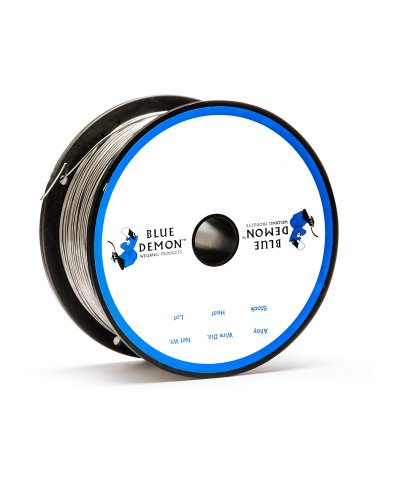
Blue Demon’s 309LFC-O stainless flux-core wire is designed for full AWS E309LFC-O classification, making it suitable for welding diverse stainless alloys used in exhaust systems. The wire supports a wide range of positions including horizontal and full welding positions, allowing flexibility during install and repair work. The flux-core approach provides shielding in outdoor environments, reducing the need for external shielding gas and improving usability when working on exhaust components that may be exposed to ambient conditions. This option is particularly relevant for projects requiring a mixture of stainless alloys or when transitioning between different SS grades on a single exhaust assembly. The packaging and wire dimensions align with standard welding practices for hobbyists and professional shops alike.
Practical considerations include ensuring the base material compatibility and desired corrosion resistance. Post-weld cleaning and appropriate protective coatings can further improve the longevity of exhaust joints welded with stainless flux-core wire.
ARCCAPTAIN Flux Core Welding Wire .030 E71T-GS For Exhaust

The ARCCAPTAIN .030 E71T-GS flux-core welding wire offers a practical solution for exhaust fabrication using mild carbon steel. The 2-pound spool provides enough material for typical exhaust repairs and light fabrication tasks, and the self-shielded gasless feature is beneficial for outdoor welding where shielding gas supply is not readily available. The core design promotes smooth arc action and higher feedability, reducing splatter and helping produce clean, reliable welds on rusty, dirty, or painted base materials. It supports multiple passes for joints like T-joints, butt welds, and lap joints, which can be common in exhaust assemblies. The wire is designed to perform under varying environments, including outdoor conditions and higher altitude work, making it a versatile choice for field technicians and hobbyists alike.
Potential drawbacks include the need for careful heat management on thicker sections and ensuring clean surface preparation to maximize corrosion resistance and weld integrity over time.
Forney 42300 Flux Core MIG Wire For Exhaust

Forney’s 42300 Flux Core MIG Wire is a mild steel E71T-GS wire with a .030-inch diameter, packaged in a 2-pound spool. It is designed for all-position welding and performs well on rusty, dirty, or painted materials—conditions often encountered in automotive exhaust work. The self-shielded nature makes it suitable for outdoor use without a shielding gas supply. It runs hotter than some solid wires, which can enable faster travel speeds and deeper penetration on certain joint configurations, making it a solid choice for single-pass applications or projects requiring efficient progress in windy environments. It is recommended for exterior exhaust repairs where portability and simplicity are valued, though it may not be ideal for high-precision cosmetic welds on polished surfaces.
When selecting this wire, consider joint design, base material thickness, and the environment where the exhaust system will operate. Post-weld inspection and cleaning help ensure long-term durability against corrosion and heat-related wear.
Buying Guide: Key Considerations For Flux Core Wires In Exhaust Work
- Material compatibility: Carbon steel vs stainless steel wires are suited to different exhaust components. Match the wire to the base material grade to avoid brittle joints or corrosion.
- Shielding method: Self-shielded flux core wires are ideal for outdoor work or locations without gas supply. Gas-shielded wires can offer cleaner beads and deeper penetration in controlled environments.
- Diameter and deposition: Thinner wires (.030 in) are better for thinner exhaust sections and precision work, while thicker wires (.035 in) enable higher deposition rates on heavier sections.
- Position and ease of use: All-position wires support varied exhaust geometries, from flat hangers to vertical sections. Consider portability and spool size for field repairs.
- Surface condition: Rust, scale, and paint on exhaust parts impact weld quality. Some flux-core wires include deoxidizers to assist with mildly contaminated surfaces.
- Post-weld considerations: Cleaning, passivation (for stainless), and coatings can extend exhaust life and corrosion resistance after welding.
- Environmental factors: Outdoor welding in wind or dust requires stable arc and manageable spatter; flux-core options are generally more forgiving in these conditions.
- Gas availability: If a shop has a reliable shielding gas setup, gas-shielded wires may deliver cleaner welds, especially on stainless or critical joints.
Choosing the right flux core wire depends on the base material, environmental conditions, and the required robustness of the joint. The selections above provide options across carbon steel and stainless steel families, with varying spool sizes and shielding needs to support both fieldwork and shop projects related to exhaust systems and related fabrications.