Fuel pressure gauges help you quickly diagnose fuel system issues, from weak fuel delivery to failing regulators. This article highlights five reliable options and provides practical guidance for choosing the right gauge for cars, motorcycles, trucks, and RVs. Each pick is rated for accuracy, durability, and ease of use.
| Product | Brand | Pressure Range | Notes |
|---|---|---|---|
| BETOOLL Fuel Pressure Test Kit 0-100 PSI | BETOOLL | 0-100 psi / 0-7 bar | Universal adapters included |
| 0-140PSI Fuel Pressure Tester Kit (jiouxip) | jiouxip | 0-140 psi / 0-10 bar | Wide compatibility with gasoline engines |
| Marshall Instruments LBB00100 Fuel Pressure Gauge | Marshall | 0-100 psi | Stainless steel, liquid-filled option |
| SENCTRL 0-100 Psi Fuel Pressure Gauge | sENCTRL | 0-100 psi | Glycerin-filled, stainless steel case |
| MEASUREMAN Fuel Pressure Gauge Kit 0-15Psi | MEASUREMAN | 0-15 psi | 1-1/2″ dial, back mount |
BETOOLL Fuel Pressure Test Kit 0-100 PSI
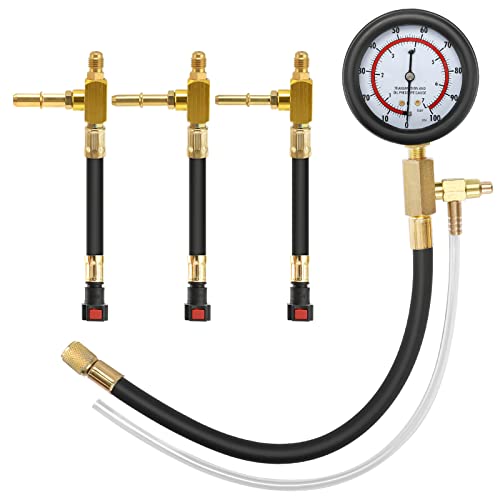
The BETOOLL kit features a double-scale gauge that reads 0-7 bar and 0-100 psi and includes three adapters: 6.30mm (SAE 1/4), 7.89mm (SAE 5/16), and 9.49mm (SAE 3/8). Its universal design fits most engines for quick pressure readings. The kit aims to help diagnose low fuel pressure, faulty regulators, leaking injectors, fuel leaks, and clogged filters. Constructed with brass connectors and a corrosion-resistant rubber hose for durability.
0-140PSI Fuel Pressure Tester Kit (jiouxip)

jiouxip’s kit covers a broad testing range up to 140 psi with a dual-scale display. It includes multiple adapters to fit most gasoline engines in cars, trucks, motorcycles, and RVs. Note that it may not be compatible with certain diesel high-pressure systems or direct-injection engines. The tool emphasizes accurate measurement with high-precision sensors to diagnose fuel delivery and injector issues.
Marshall Instruments LBB00100 Fuel Pressure Gauge

The Marshall LBB00100 offers a 1.5-inch dial with a 0-100 PSI range. Its stainless steel case and bezel provide durability, while the option for a liquid-filled gauge helps dampen pulsations. The red pointer provides quick readability, making it a solid choice for regular diagnostic use in garages or field service.
SENCTRL 0-100 Psi Fuel Pressure Gauge

SENCTRL presents a glycerin-filled, 1-1/2-inch gauge with a 0-100 psi range and a 304 stainless steel case for corrosion resistance. The glycerin filling reduces pointer flutter from engine vibration, helping maintain accuracy during operation. It’s suited for measuring fuel, water, or oil pressures and compatible with various fuel pressure regulators and inline testers.
MEASUREMAN Fuel Pressure Gauge Kit 0-15Psi

MEASUREMAN’s 0-15 psi gauge features a 1-1/2-inch dial, center back mount, and a 5/16-inch brass T-fitting adapter for easy integration into the fuel line. The package includes two stainless steel clamps, offering a compact, durable solution for low-pressure fuel system testing and diagnostics in a variety of vehicles.
MEASUREMAN 1.5″ Black Dial Gauge (0-15Psi) — Alternative

This MEASUREMAN model offers a larger, black dial with a 0-15 psi range and 1/8″ NPT center-back mount. It is suitable for precise, straightforward reads in light-duty fuel testing scenarios and aligns with common automotive test setups. The stainless construction helps resist corrosion in regular shop use.
Buying Guide: Key Considerations
- Pressure range: Match the gauge range to your common vehicles. Most gasoline engines run within 0-100 psi, but some test kits cover up to 140 psi for modern engines or direct-injection systems.
- Dial size and readability: Larger dials (1.5 inches) offer easier readings, especially under bright shop lighting or vibration.
- Construction and durability: Look for stainless steel or brass fittings, and consider glycerin-filled gauges to minimize pointer flutter from pulsation.
- Adapters and compatibility: Ensure the kit includes adapters that fit your vehicle’s fuel rail or supply lines. Universal fittings reduce the need for additional purchases.
- Mounting and installation: Center-back mount or inline configurations affect how you integrate the gauge into a workflow. Some kits include T-fittings for direct fuel-line connections.
- Accuracy and drift: Check for gauges with clear calibration metrics (± a few percent across their range) and stable performance over time.
- Usage scope: Some gauges are designed for gasoline engines only, while others tolerate water or oil pressures in testing setups.
- Portability vs. permanence: Handheld or compact kits are ideal for field work; larger, multi-accessory kits suit a dedicated shop.