Air quality inside a vehicle matters for comfort and health. This guide highlights top cabin air filters that balance filtration performance with compatibility, helping you maintain fresh, clean air while driving. Each option below is selected for effectiveness, reputable brands, and broad vehicle compatibility.
Summary of chosen products:
| Product | Brand | Key Benefit | Compatibility Notes |
|---|---|---|---|
| BOSCH 6091C HEPA Cabin Air Filter | Bosch | HEPA filtration with 99.97% efficiency at 0.3 microns | Buick, Cadillac, Chevrolet, GMC, more |
| BOSCH 6081C HEPA Cabin Air Filter | Bosch | High-efficiency HEPA media with dense trapping capability | Ford Expedition, F-Series, Lincoln Navigator |
| Puroma Cabin Air Filter with Activated Carbon | Puroma | Activated carbon for odor reduction | Honda & Acura models |
| BOSCH 6055C HEPA Cabin Air Filter | Bosch | HEPA filtration with additional media for higher capacity | Lexus, Subaru, Toyota and more |
| FRAM Fresh Breeze Cabin Air Filter CF10285 | Fram | Baking soda odor control and easy installation | Various Toyota, Lexus, Scion, Subaru and more |
Note: Product availability and vehicle compatibility can vary by year and trim. Always verify fitment for your specific vehicle before purchasing.
BOSCH 6091C HEPA Cabin Air Filter
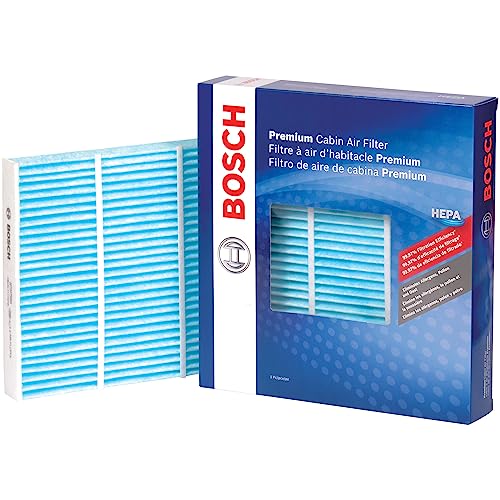
The BOSCH 6091C is a premium cabin air filter designed to meet HEPA standards with a filtration efficiency of 99.97% at 0.3 microns. It incorporates a melt-blown electrostatic layer, a dense media structure, and an additional static cotton layer to increase trapping capacity. This combination aims to reduce particulates and deliver cleaner air inside the vehicle, contributing to better air quality for occupants.
Key details:
– Filtration efficiency: 99.97% at 0.3 microns
– HEPA-based media with enhanced capacity
– Broad compatibility across multiple makes and models
BOSCH 6081C HEPA Cabin Air Filter
Designed to meet HEPA standards with a 99.97% efficiency at 0.3 microns, the 6081C filter uses a melt-blown electrostatic layer and dense media to trap fine particulates effectively. An added static cotton layer enhances capacity, supporting cleaner air in vehicles susceptible to dusty or urban air pollution.
Key details:
– HEPA standard filtration
– Dense media plus electrostatic layer for efficiency
– Good option for Ford, Lincoln, and related models
Puroma Cabin Air Filter With Activated Carbon

Puroma’s cabin air filter combines soda-woven media with an activated carbon layer to reduce odors and capture contaminants. It provides a close-meshed barrier to protect the HVAC system and improve airflow, which can help maintain efficient climate control while filtering odors in urban or polluted environments. Regular replacement is recommended to sustain performance.
Key details:
– Activated carbon for odor control
– Close-meshed filtration supports HVAC performance
– Recommended replacement intervals for optimal results
BOSCH 6055C HEPA Cabin Air Filter
The 6055C filter follows Bosch’s HEPA-grade approach with a melt-blown electrostatic layer and densely packed media, plus an added static cotton layer to boost capacity. This design aims to trap fine particulates effectively while maintaining good airflow, offering broad compatibility with luxury and mainstream makes alike.
Key details:
– 99.97% efficiency at 0.3 microns
– Enhanced media for high capacity
– Compatible with multiple Lexus, Subaru, Toyota, and more
FRAM Fresh Breeze Cabin Air Filter CF10285

FRAM’s CF10285 filter emphasizes odor control with Arm & Hammer baking soda and is designed to fit a variety of Toyota, Lexus, Scion, Subaru, and other models. It also notes broad vehicle applicability and a straightforward installation, which can be attractive for DIY replacements. Odor control is a primary selling point here, alongside standard filtration.
Buying Guide: Key Considerations for Cabin Air Filters
- Filtration efficiency: HEPA-grade filters (typically around 99.97% at 0.3 microns) offer strong protection against fine particulates. Consider whether you want extra odor control via activated carbon.
- Media technology: Look for melt-blown electrostatic layers and dense media for higher filtering capacity and better particulate capture without overly restricting airflow.
- Activated carbon: Useful for odor and gas mitigation, especially in urban areas or around construction and diesel traffic. Not all filters include carbon, so decide based on needs.
- Vehicle compatibility: Verify fitment with your exact year, make, and model. Some filters cover a broad range of vehicles, while others target specific brands or families.
- Replacement interval: Regular replacement maintains HVAC efficiency. Heavily polluted environments may require more frequent changes.
- Installation ease: Some filters are designed for quick, tool-free swaps. If you DIY, ease of installation can save time and help ensure a proper seal.
- Brand reputation: Well-known brands like Bosch and Fram tend to offer consistent performance and availability, while others may focus on cost-conscious options with solid filtration.
- Odor control vs. particulate filtration: If odors are a primary concern, prioritize activated carbon filters. If you’re mainly filtering dust and pollen, standard HEPA-style filters may suffice.
Choosing the Right Filter for Your Needs
For drivers prioritizing the highest filtration efficiency, the Bosch HEPA filters (6091C, 6081C, 6055C) provide robust particulate capture and strong media construction. If odor control is a top priority, activated carbon options from Puroma or Fram offer additional odor mitigation, with Fram also highlighting easy installation and broad model coverage. Consider your climate, daily driving conditions, and vehicle compatibility when selecting a filter. Regular maintenance and timely replacement remain essential to maximize air quality benefits.
When evaluating options, compare:
– Filtration efficiency and media type
– Carbon presence and odor control capability
– Fitment with your vehicle
– Replacement intervals and maintenance requirements