Choosing the right intake manifold for a Chevy 5.3 Vortec build can unlock better torque, smoother idle, and improved throttle response across the RPM range. The following selections focus on aluminum dual-plane designs and compatible carbureted setups that work with small-block Chevy (SBC) engines from the 1990s through early 2000s. Each option emphasizes durability, RPM range suitability, and a balance between performance and street usability. Use the buying guide at the end to compare features and compatibility for your specific application.
| Product | Brand | Compatibility | Notes |
|---|---|---|---|
| ND Aluminum Small Block SBC Intake Manifold DM-3202H | ND | Chevy 5.3/5.0/5.7 SBC, Carbureted | Dual plane, idle-6500 RPM |
| JGhyperX 7501 2026 Vortec Dual Plane | JGhyperX | Chevy SBC 262-400 V8 | Aluminum, dual plane, RPM idle-6500 |
| Edelbrock 2116 Performer Vortec Aluminum | Edelbrock | Vortec 5.0/5.7 SBC | External water bypass provisions |
| NEWZQ Carbureted Dual Plane for Chevy Small Block Vortec | NEWZQ | Chevy 5.0/5.7/350 Vortec | Complete intake section |
| JGhyperX 2007 Vortec Dual Plane Intake | JGhyperX | Chevy SBC 5.0/5.7/350 V8 | Idle-5500 RPM, dual plane |
Below are five product picks that align with the 5.3 Vortec and related small-block Chevy setups, offering a range of features and RPM targets for street, performance, and light hot-rodding use. Each section provides a concise overview, key specs, and practical notes to help with decision-making.
ND Aluminum Small Block SBC Intake Manifold DM-3202H

Designed for carbureted small-block Chevy engines, the DM-3202H is crafted in aluminum to reduce weight while preserving strength. The manifold is listed as a complete intake section with no EGR provisions, suitable for classic builds aiming for straightforward bolt-on performance. Its dual-plane design favors torque delivery in street-driven applications and provides a balanced intake path for idle-to-mid RPM ranges. Operation notes indicate compatibility with 6500 RPM, aligning with typical street-ported V8 setups. This option emphasizes durability and a reliable seal for everyday driving and light performance improvements.
JGhyperX 7501 2026 Vortec Dual Plane

This aluminum dual-plane manifold targets a broad SBC range, including 262-400 cubic inch engines, with a focus on idle-to-6500 RPM performance. The 7501 designation is a product code that signals a versatile, lighter-weight design ideal for performance-minded street builds. It’s noted as compatible with a wide swath of small-blocks and features a durable aluminum construction to resist heat soak while providing stable air distribution. The included details emphasize a stable RPM window and compatibility with spread- or square-bore carburetors in many 5.3-related V8 configurations.
Edelbrock 2116 Performer Vortec

The Edelbrock 2116 Performer Vortec aluminum manifold is a staple for Vortec-powered builds, designed to improve torque across a wide RPM range. Provisions for external water bypass are included, which can be advantageous in cooling setups or when integrating with aftermarket cooling loops. The design does not support exhaust-heated chokes, which is typical for modern Vortec-focused intakes. This manifold aims to deliver better mid-range torque and steady acceleration, particularly in daily driving and higher-load conditions where mid-RPM power matters most.
NEWZQ Carbureted Dual Plane For Chevy Small Block Vortec

The NEWZQ dual-plane intake is a carbureted replacement aimed at 5.0L/5.7L/350 Vortec engines from 1996 onward. The kit is described as complete with an emphasis on compatibility via part OE numbers (82007). For builders updating older 1996-2007-era Vortec blocks, this model provides a straightforward bolt-on upgrade that can improve airflow balance and overall throttle response, especially when paired with suitable carburetors. It’s a practical option for those seeking a direct compatibility match rather than a large, complex intake system.
JGhyperX 2007 Vortec Dual Plane
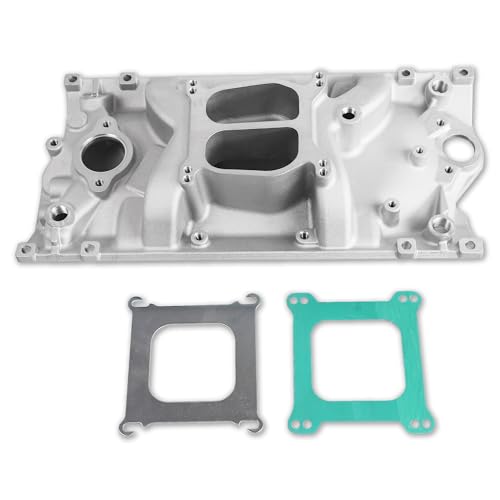
This JGhyperX offering targets the 2007-era Vortec designs, focusing on 305/5.0L and 350/5.7L SBC engines. The dual-plane configuration supports idle to 5500 RPM with complete intake section coverage, making it suitable for moderate-performance builds that still prioritize street drivability. Aluminum construction keeps weight down while maintaining rigidity, which helps with consistent throttle response and air distribution across the RPM band. It is a practical choice for users upgrading from older stock manifolds without entering a high-RPM race setup.
Htostar Racing Dual Plane Intake

The Htostar Racing Dual Plane intake is crafted to replace Vortec-era 5.0/5.7-liter engines in a cast aluminum body. It emphasizes compatibility with spread or square bore carburetors, and lists a basic operating range up to 5500 RPM. The 3.23-inch dual-plane height is a detail that helps clear hood configurations and keeps manifold height within typical under-hood clearances. The design aims to balance improved airflow with reliable street performance, making it a viable option for daily drivers and light performance builds.
MNJWS Intake Manifold Gasket Set

While not an intake itself, the MNJWS gasket set is an essential complement for Vortec and SBC upgrades. It seals the intake manifold to the cylinder heads, addressing issues such as misfires, coolant leaks, overheating, and loss of power. The kit is compatible with a wide range of 4.8L, 5.3L, and 6.0L GM Vortec engines, including several Silverado, Suburban, and Tahoe models. Replacing the gaskets when upgrading manifolds can help ensure reliable performance and reduce the risk of vacuum leaks that undermine gains from a new manifold.
Woosphy 2007 Intake Manifold Dual Plane

The Woosphy 2007 replacement is designed for Chevy Small Block Vortec engines in 1996-2002 models, covering 5.0L/305 and 5.7L/350 variants. It features a dual-plane aluminum construction suitable for carbureted setups and states compatibility with 82007 parts. The design emphasizes durability, weight savings, and a straightforward installation path that fits within common hood and engine bay configurations. This option is positioned for users seeking a direct, affordable upgrade to airflow and throttle response with minimal modification.
Buying Guide: Key Purchase Considerations
- Engine compatibility: Verify that the manifold is designed for your specific SBC displacement and year, especially with Vortec-era blocks and carburetor types.
- Intake style: Dual-plane designs generally favor torque and low-to-mid RPM performance, while single-plane manifolds maximize high-RPM power. For street use, dual-plane is commonly preferred.
- Material and weight: Aluminum manifolds reduce weight and heat soak, improving throttle response and efficiency. Ensure the unit is corrosion-resistant and well-supported by the manufacturer.
- Carburetor compatibility: Confirm whether the manifold supports spread or square bore carburetors if your setup uses one of these styles.
- Installation and gaskets: Some listings include a complete intake section; others require separate gasket sets. Replace gaskets during install to ensure a proper seal and performance gains.
- Cooling provisions: External water bypass features can simplify cooling system integration if needed for high-performance or track setups.
- RPM range and idle: Match the manifold’s recommended RPM window with your intended driving style, whether daily commuting or performance-oriented use.
- Bill of materials: If a kit, confirm that it includes all necessary components (bolts, spacers, and seals) to minimize additional purchases.
- Warranty and support: Look for guaranteed fit and return policies, particularly when upgrading an engine’s induction path.
- Budget and value: Weigh the cost against expected gains in torque, throttle response, and boot-up efficiency to determine overall value for your build.
These choices provide a spectrum of compatibility and performance goals for users upgrading a 5.3 Vortec or related SBC engines. When evaluating options, consider how the manifold will interact with your carburetor, exhaust system, and overall tuning strategy to maximize benefits without introducing setup complexity.